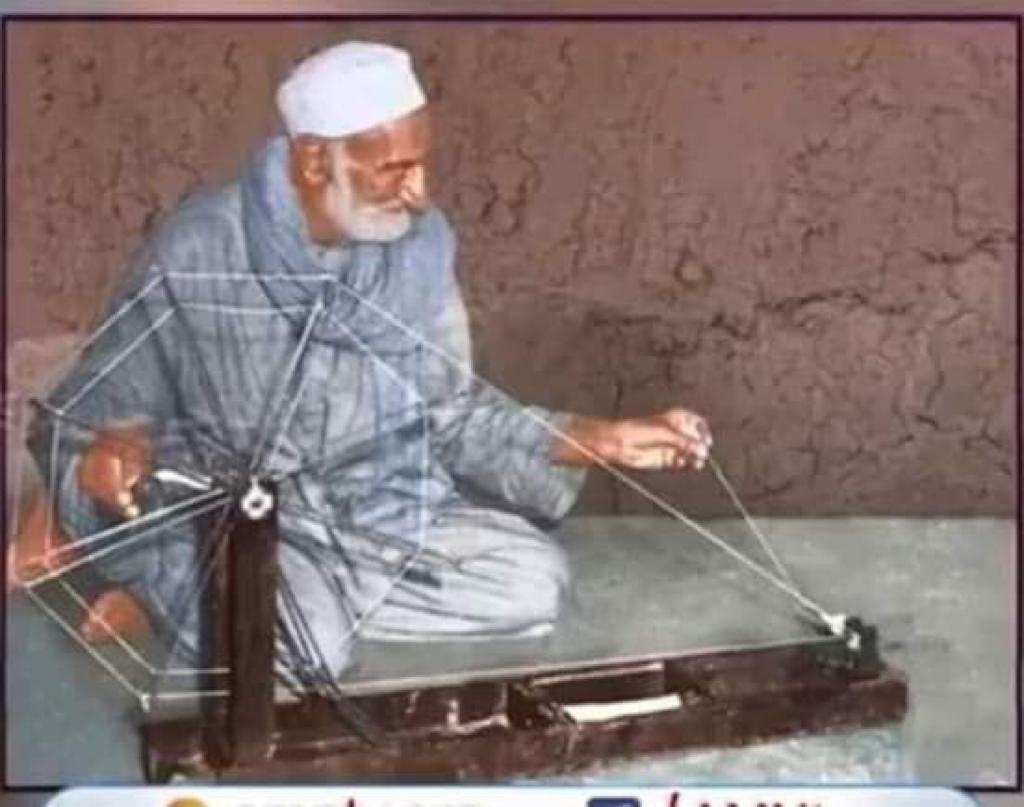
Abdul Ghaffar Khan, the icon of passive peaceful resistance in South Asia,
non-violence and Pashtoon nationalism, enjoys a very important part in
Prof. Dr. Sayed Wiqar Ali Shah's life. He studied the life and times of
Abdul Ghaffar Khan in detail and is a pioneer in working on the Khudai Khidmatgar
movement and the regional politics of the first half of the twentieth century.
Dr. Shah interviewed more than 50 Khudai Khidmatgars personally and was
fortunate to meet Abdul Ghaffar Khan on so many occasions. He benefited largely from the
experience of these great personalities, who also left a permanent imprint on his life. He
found them sincere and loving people who dedicated themselves to the service of the
Pashtoon community and spent many years resisting British colonialism in this part of
South Asia.
After spending long hours with these stalwarts of the freedom movement, a
drastic change can be observed in Prof. Shah's life. He also personally
believes in service to humanity and dedication to both his work and people. Prof. Shah
took inspiration from these great souls — a circle of remarkable figures who always found
an important place in his everyday discussion.
"Bacha Khan was a Man to Match His Mountains — but unfortunately not properly understood
in our country."
— Prof. Dr. Sayed Wiqar Ali Shah
Prof. Shah desires to write an authentic history of the Khudai Khidmatgar Movement
and a biography of Abdul Ghaffar Khan, both in Pashto and English —
a long-cherished scholarly ambition stemming from decades of firsthand research and
personal relationships with the movement's veterans.
Presently, Prof. Shah is considered an international authority on the Khudai
Khidmatgar Movement and Abdul Ghaffar Khan, and is respected at national and
international forums for his objective and correct analysis of the movement and its
founder. Dr. Shah is additionally the very first student who completed a PhD
doctorate on Abdul Ghaffar Khan and the Khudai Khidmatgar Movement in Pakistan —
a distinction that underlines his pioneering role in this field of South Asian history.